VACCINATION GUIDELINES
We recommend working closely with your veterinarian to devise the most appropriate vaccination program for your horse. Many factors should be considered including age, lifestyle, geographical location and any previous adverse vaccine reactions. Generally, we group vaccinations into “Core Vaccinations” which are recommended for all horses and “Risk Based Vaccinations” which may only be recommended for certain horses based on risk of the disease. In our region, core vaccinations include rabies, West Nile Virus, Eastern Encephalitis/Western Encephalitis and Tetanus which are generally recommended for all horses in our area. Risk based vaccinations include Influenza/Rhinopneumonitis (“Flu/Rhino”), Potomac Horse Fever (PHF), Strangles (Streptococcus equi) and botulism.
CORE VACCINATIONS
-
Rabies is a rare but invariably fatal neurologic disease of horses which also has public health implications. Exposure to the rabies virus occurs through the bite of a diseased animal, most commonly bats, skunks or raccoons in Ontario. The virus is carried in saliva and quickly travels to the brain resulting in progressive and fatal encephalitis. We recommend annual vaccination to protect against rabies.
-
This virus is transmitted from mosquitoes and will result in encephalitis which can be fatal in approximately 30% of cases. Recently, West Nile Virus cases have been more prevalent in Ontario and affected horses will show neurologic signs such as tremors, hyperesthesia and fever. It is recommended to vaccinate horses annually for West Nile Virus, ideally in spring before mosquito season.
-
Eastern and Western Encephalitis are rapidly fatal viruses that are spread by mosquitoes and will cause progressive neurologic signs consistent with encephalitis. . These diseases are fortunately still considered rare in Ontario horses but have been reported. This vaccination is commonly administered as a combination vaccine with tetanus and we recommend annual vaccination in spring before mosquito season.
-
Tetanus is a highly fatal neuromuscular disease which can be contracted through bacterial spores in the soil. Once these spores enter the body through a puncture wound or surgical site, there is production of a neurotoxin which will cause severe stiffness, the typical “saw horse stance” and colic. We typically recommend annual vaccination in spring with the EEE/WEE/Tetanus vaccine but we may also choose to administer a tetanus booster prior to a surgery or if a horse has a deep puncture wound.
Risk Based Vaccinations
-
Streptococcus equi subsp equi (“Strangles”) is a contagious respiratory pathogen which will result in fever, cough, nasal discharge and swollen lymph nodes. This disease is rarely fatal but will cause significant illness and often affects many horses on the property due to the highly contagious nature. Although vaccination cannot prevent the horse from contracting Strangles, the vaccine may help to reduce the severity of clinical signs. Certain horses may not be suitable candidates for this vaccination due to previous exposure to Strangles which should be discussed with your veterinarian.
-
This disease is caused by a bacteria called Neorickettsia risticii often found in aquatic snails and other aquatic insects. This bacteria tends to cause significant gastrointestinal disease including colic, diarrhea, fever and laminitis and can be fatal. Although the vaccine cannot prevent the horse from contracting PHF, vaccination may help to reduce severity of clinical signs. This vaccine should be considered if PHF is common in the area or there have been previous cases on the farm and should be administered once yearly in spring as cases are most prevalent in summer and early fall.
-
The flu/rhino combination vaccination protects against both respiratory viruses. Influenza commonly causes respiratory disease while rhinopneumonitis (EHV-1, EHV-4) may cause abortion, respiratory or neurologic disease which can be fatal. It is also a requirement for competition horses to be vaccinated for flu/rhino every 6 months as per FEI and Equine Canada rules. This vaccine can be administered as an intranasal or intramuscular injection and is typically recommended every 6-12 months depending on the lifestyle of the horse.
-
Botulism is caused by Clostridium bacteria produced from spores in the soil resulting in production of a fatal neurotoxin. This is most common in horses ingesting animal carcass remnants within the hay or poorly preserved haylage/silage. Affected horses will show progressive tremors and weakness, often resulting in recumbency and death if not treated early with the antitoxin. Certain geographical areas are more at risk in addition to horses that are being fed haylage/silage.
DEWORMING GUIDELINES
Our deworming recommendations are based on the guidelines put forward by the American Association of Equine Practitioners (AAEP). These guidelines were recently updated in May 2024 and provide updated information on deworming recommendations given the widespread resistance to the few dewormers we have available for horses. Unfortunately there are no new equine dewormers on the horizon and we must use our current products responsibly. Care of the horse’s environment is also important to minimize ongoing exposure to parasites.
There are only a few different classes of dewormers available for horses at this time and it is important to consider the age, parasite load, clinical status of the horse and time of year when determining the most effective product. Our deworming guidelines vary considerably based on these factors in addition to fecal egg counts which we recommend on an annual basis. Typically we classify horses as low, medium or high shedders based on their fecal results and into juvenile (<5 years old), mature (5-15 years old), senior ( > 15 years old) categories.
It is important to remember that juvenile horses will have significantly higher parasite loads than mature horses, often with a high burden of ascarids (roundworms) which are not nearly as common at other life stages. Foals and yearlings will be dewormed approximately four times per year with three to four treatments during the following few years of life. Fecal egg counts are recommended to ensure the most appropriate dewormer is selected based on the parasite burden.
Typically for mature horses (5-15 years old), we will recommend deworming twice a year with ivermectin/moxidectin with one of these treatments involving praziquantel for tapeworms (typically in late fall). Horses that are characterized as “high shedders” would likely receive one additional deworming per year.
Senior horses often follow the recommendations for mature horses but may develop higher parasite loads due to decreased immune function and Cushing’s Disease (more common in this age group). Fecal egg counts are important to monitor parasite load and treat accordingly if additional treatments are warranted.
*It is always recommended to consult with your regular veterinarian to determine the most appropriate and safe deworming program for your horse as some dewormers may be contraindicated for different sizes or ages of horses/ponies*
STUDENT OPPORTUNITIES
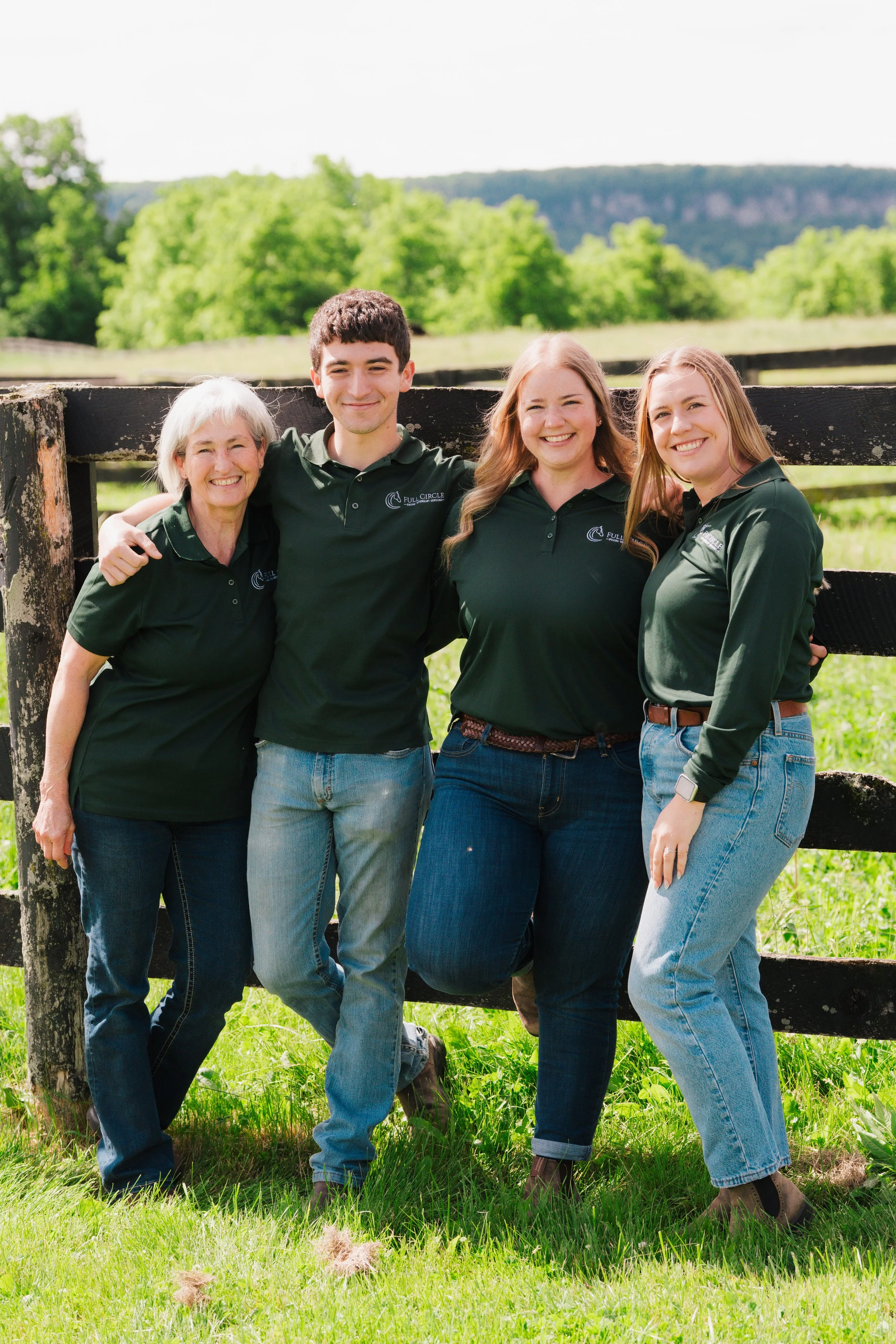
At Full Circle Equine Veterinary Services, we are committed to the sustainability of equine practice. We are able to offer shadowing opportunities to veterinary students and encourage those interested to contact us by email.
full circle in the wild